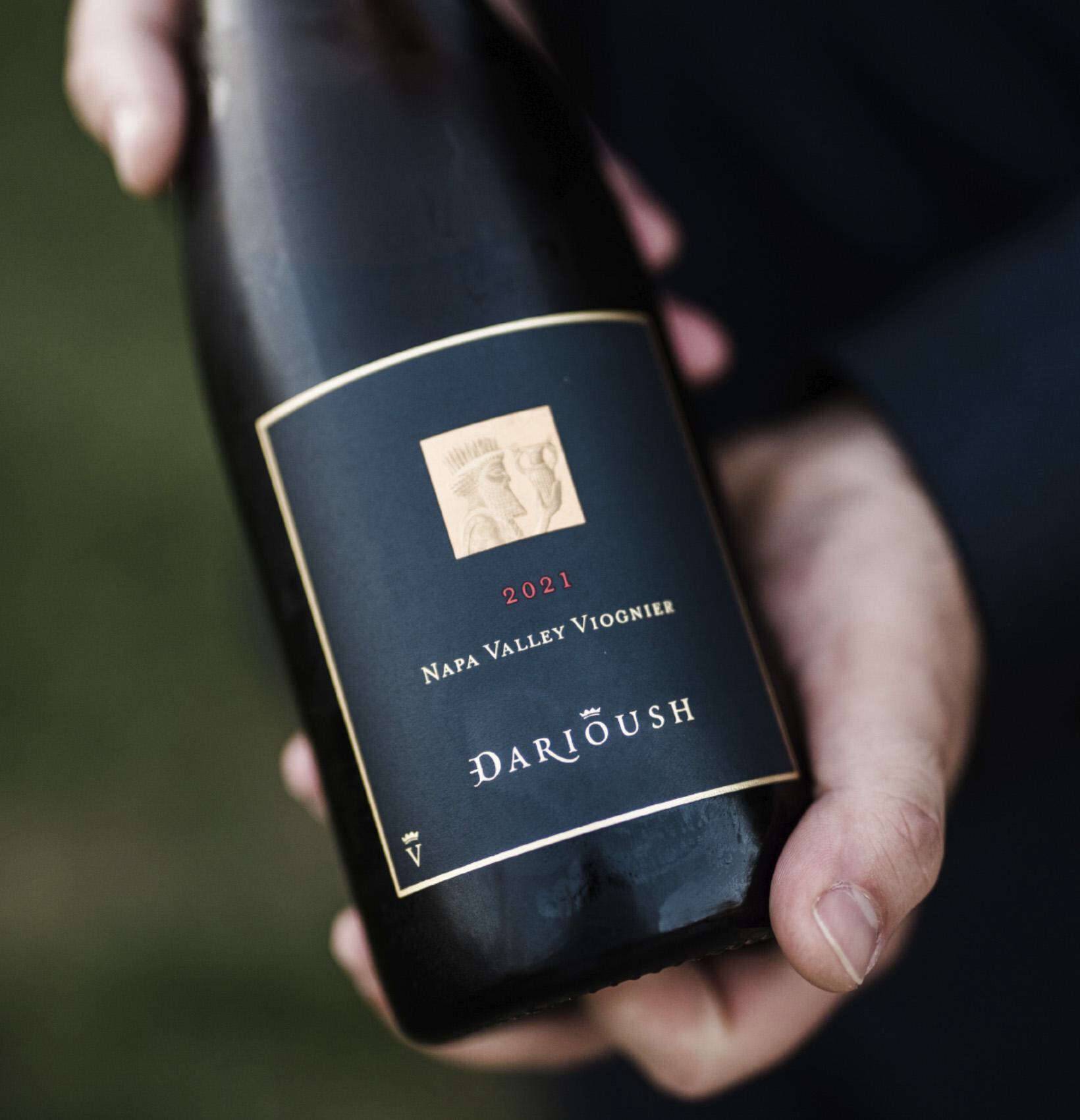
The Crown Jewel of the Darioush Estate, Darius II is a refined, age-worthy collectible that captures the singular and exceptional qualities of each vintage from our Napa Valley vineyards. The time-honored artworks selected for each label span thousands of years of creativity and reflect the craftsmanship and integrity of Darius II.
THE LABEL ART
This striking label design is drawn from a mid- 19th-century tile from Tehran, Iran—acquired in 1876 by the Victoria and Albert Museum, London, as part of a larger collection of “modern tiles” showcasing the stylistic range of interior architecture of that era. Painted in vibrant blue over white, the chevron motif emulates the flowing, feathered edges of silk ikat—an ancient weaving technique prized for its complexity and movement. Though made of earthenware, it evokes the fluidity of fabric, reflecting the artistry and innovation at the heart of Persian design.
This hand-crafted, one-of-a-kind gift features our estate's crown jewel, Darius II Cabernet Sauvignon alongside a set of two hand-painted crystal tumblers by Vienna-based craftsmen, Lobmeyr. These delicate works were commissioned to highlight and complement the artwork adorning our 2022 vintage release, in collaboration with the Victoria and Albert Museum of London.
A study in power and poise, 2022 Darius II embodies all the remarkable traits of a textbook Napa Valley vintage.
The Crown Jewel of the Darioush Estate, Darius II is a refined, age-worthy collectible that captures the singular and exceptional qualities of each vintage from our Napa Valley vineyards. The time-honored artworks selected for each label span thousands of years of creativity and reflect the craftsmanship and integrity of Darius II.
THE LABEL ART
The art adorning 2014 Darius II depicts the tradition of the Saghi, or Wine Bearer, an influential and heralded position in the ancient Persian royal courts, among aristocrats, in wine houses and in mystical and religious traditions over a thousand years old. The Saghi were experts in the art and custom of hospitality, hosting and wine service. More, they were bearers of knowledge and inspiration, confidantes, muses and guides — embodying mysticism and beauty, a reflection of the Divine. In her beauty and wisdom, the Saghi possessed transcendent often angelic qualities, representing the fleeting nature of life and embodying the intoxicating and enlightening effects of wine.
Described as originally hanging in the Shah’s palace in Tehran and painted by an unknown artist in the early 1800s, the artwork was acquired by the Victoria & Albert Museum in 1876.